For Medicaid agencies, six months is both a gift and a challenge
How states can make the most of CMS' hold harmless period to strengthen operations and prepare for enforcement.
When millions depend on reliable Medicaid services, careful planning and testing matter. Recent headlines have shown how large-scale technology changes can disrupt essential public services when implementation moves too quickly or systems aren't adequately tested. For Medicaid agencies, the lesson is to prepare systems carefully before putting changes into practice.
On November 13, the Centers for Medicare & Medicaid Services (CMS) announced an optional hold harmless period through June 30, 2027. States electing this option must still assess whether applicable individuals meet work requirements or qualify for exclusions or exceptions, but may temporarily suspend coverage denials and disenrollments based solely on failure to demonstrate compliance.
Importantly, the January 1 implementation deadline remains in place. States may also choose a shorter hold harmless period.
For nearly a year, my teams have been working alongside state Medicaid agencies to prepare for new federal work requirements. CMS' decision to offer a six-month hold harmless period reinforces the value of that preparation while giving states additional time to strengthen their implementation plans.
For many public officials I’ve spoken with, this is welcome relief, but it doesn't diminish the work ahead. If anything, it raises the stakes for how states use the time they've been given.
Medicaid doesn't need perfection by July. It needs systems that work.
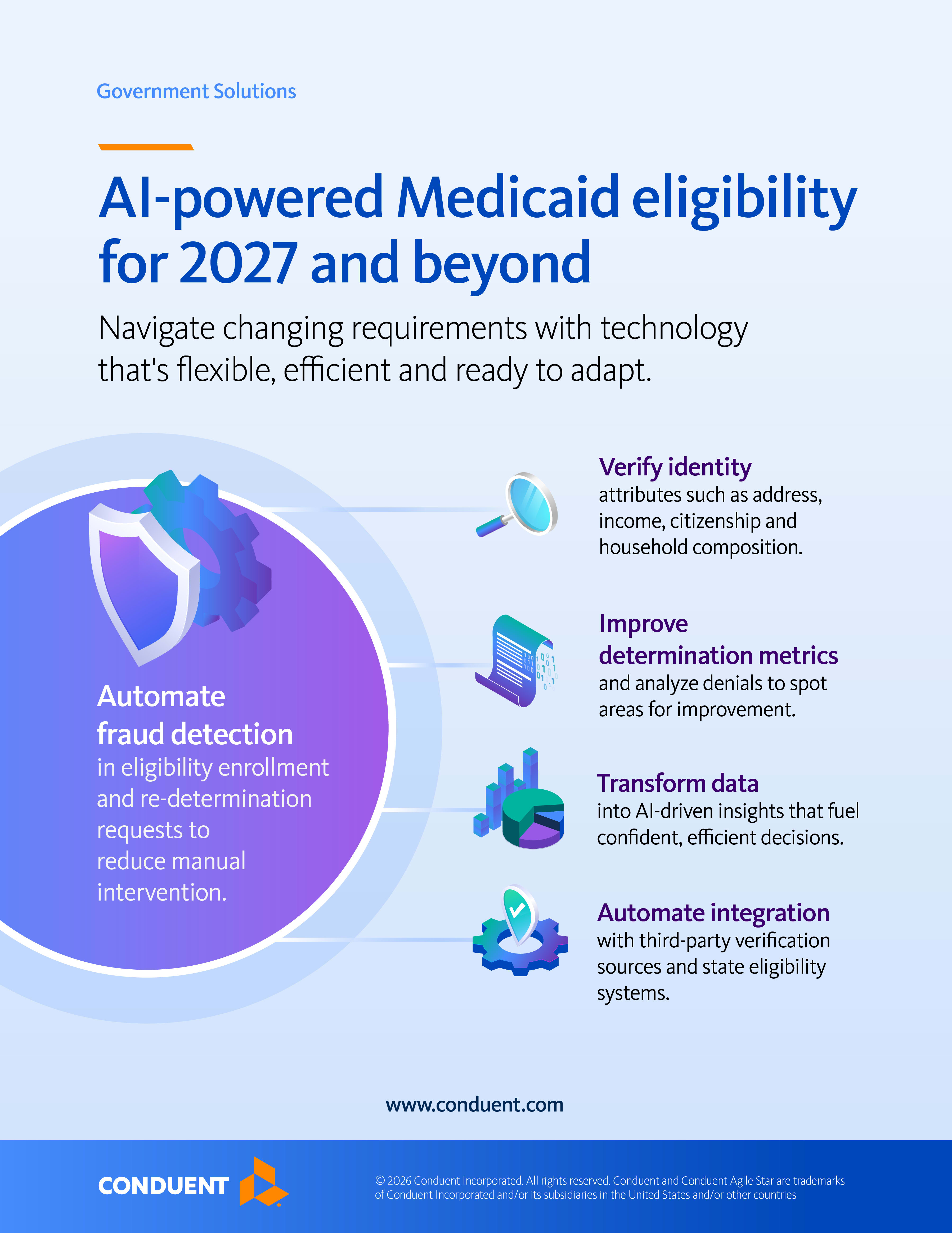
For Medicaid systems, states should resist trying to solve every technology challenge. Our quick change philosophy emphasizes incremental, modular improvements that address immediate requirements without overhauling existing systems. The priority now is reliable verification and accurate eligibility decisions, with the flexibility to adapt over time.
Six months can pass quickly, especially as teams are balancing new federal requirements with the demands of their existing day-to-day Medicaid operations. Based on our work with clients, three priorities stand out for making the most of this transition period.
- Put existing data to work
CMS encourages states to maximize automated verification. When reliable data already confirms someone meets work requirements or qualifies for an exclusion, beneficiaries shouldn't have to provide it again. States should identify gaps in data sharing, reduce manual verification and improve eligibility accuracy to ease workloads and prevent unnecessary paperwork. - Test the experience from beginning to end
The transition period provides an opportunity to see how systems and eligibility processes perform under real-world conditions. Conflicting employment records, missed exclusions and confusing notices can expose problems that routine testing may overlook. Agencies should monitor processing delays and manual workloads, drawing on frontline staff feedback to make targeted improvements before enforcement begins. - Make communication easier for beneficiaries
CMS encourages clear, timely notices explaining what has been verified, what information is missing and how to respond. States should simplify instructions, make assistance easy to find and work with community partners to connect beneficiaries with employment, education and training opportunities.
Related: Video: Work Requirements and Community Engagement Suite
What experience has taught us
My teams have seen firsthand how much the right expertise and technology can accomplish. That's the thinking behind our Work Requirements and Community Engagement Suite, which helps states improve eligibility verification through targeted changes to their existing Medicaid systems.
In one state, we helped improve Medicaid eligibility operations handling more than 26,000 cases and 30,000 calls each month, with the agency earning CMS recognition for its performance. In another, our teams support a Medicaid program serving nearly 900,000 members, with 234 system integrations that help the state respond to policy changes in days rather than months. In Colorado, our experts improved Medicaid data operations supporting 1.3 million residents, cutting hardware requirements by more than 50%.
The goal isn't simply to reach June 30. It's to arrive with Medicaid systems and processes that are demonstrably better prepared to serve the people who depend on them.
Related: Brochure: Work Requirements and Community Engagement Suite
Need help making sense of the new Medicaid work requirements?
Our experts can help your agency make the most of the transition period and prepare for enforcement.
Connect with our experts.