HR burnout is a friction problem. HR tech can help.
How HR burnout builds in small cuts
It’s the second week of open enrollment. A benefits specialist has answered the same deductible question 30 times before lunch, re-keyed a dependent change that arrived by email, and chased two approvals stuck in someone's inbox. Nothing on that list is hard. Together, they fill the day.
That’s how burnout takes hold in HR teams. It builds through constant interruptions, repetitive tasks and disconnected processes that consume time and create frustration, long before anyone notices a heavy workload. The stakes are high. Research from Gallup found that burned-out employees are 63% more likely to take a sick day and 2.6 times more likely to actively seek a different job. HR professionals are employees too, and HR teams are being asked to do more with fewer people while supporting increasingly complex employee needs.
Reducing operational friction is the most direct way to give HR teams more time for workforce planning, coaching, employee well-being and the other work that depends on human judgment.
Three ways HR technology can reduce friction
The opportunity isn’t just to automate tasks. It’s to make everyday HR work easier to get done. Technology can help reduce friction in three key areas:
Repeated questions. A large share of HR and benefits inquiries are the same few questions asked in different words. AI-powered virtual assistants can answer them in real time, so employees find information faster and HR teams see call and email volumes fall.
Manual handoffs. Approvals, data entry and status checks that move between people by email are where errors and delays live. Modern HR process automation routes approvals swiftly, reduces manual data entry and keeps work moving without a person pushing it.
Disconnected systems. When employee data lives in several places, every request becomes a reconciliation exercise. Workforce administration software that centralizes employee information into a single digital experience removes a whole category of rework.
Recent Gartner research points to the same shift: AI is taking on more transactional HR work, and organizations are redesigning workflows around scalable, employee-centered services. Conduent Human Capital Solutions combine digital HR tools, automation and AI-powered experiences to streamline workforce administration and improve responsiveness across the employee lifecycle.
Turning time savings into better outcomes
When the repetitive work is handled, particularly during high-volume periods such as open enrollment, HR professionals get back time for coaching, engagement and workforce planning. The human element of HR grows, because there’s finally room for it.
Employees feel the difference first. They want quick answers, intuitive experiences and personalized support. Benefits administration automation delivers guided enrollment, proactive reminders and personalized recommendations, and AI-powered tools give on-demand answers around the clock. Conduent's Life@Work Connect platform shows how these capabilities simplify benefits navigation, strengthen self-service and create a more personal employee experience.
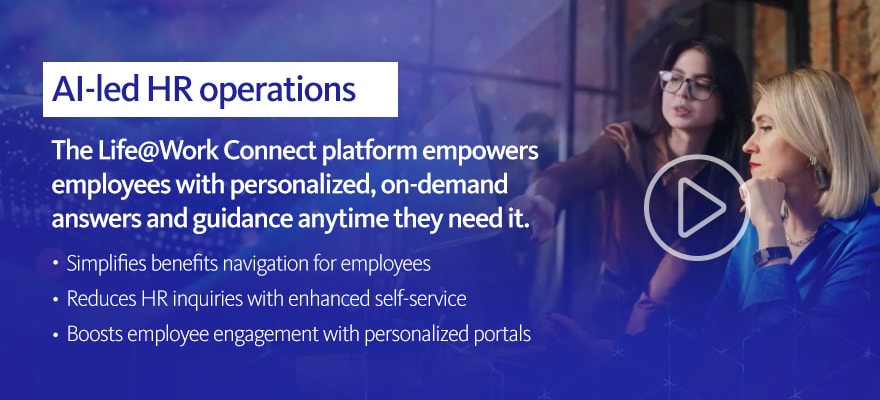
Connected employee lifecycle management carries the experience from onboarding through career development and benefits support, so people can find what they need at every stage. Efficiency and empathy stop competing. Technology expands the operational capacity needed to deliver human-centered support at scale.
Three questions before you invest in HR tech
Technology delivers results when it is implemented thoughtfully, communicated clearly and aligned with broader organizational goals. Three questions keep an HR workflow automation program honest:
Where does the effort go today? Map the processes that consume the most manual hours, generate the most employee frustration or carry the highest operational risk. Those are the first candidates for automation.
Will people use it? Intuitive interfaces, accessible self-service and clear communication about what changes for employees and HR teams drive adoption. Training and transparency build confidence in new AI-powered HR solutions.
Who runs it after go-live? Technology is only part of the equation. A partner with deep expertise in both technology and workforce operations, and the scalable resources to match, keeps the gains in place as volumes and regulations change.
Reducing burnout starts with reducing friction
Thoughtfully implemented, HR technology reduces administrative burden, creates more responsive employee experiences and gives HR teams greater capacity for people-centered work.
This open enrollment season, count the interruptions. That number is where the burnout conversation starts.
Learn more about Conduent Human Capital Solutions.
Related content: Humanness vs. humanless in a tech-driven world