How intelligent interfaces are redefining mobility, one interaction at a time
Why your next transit assistant might be a kiosk
The world’s cities are growing, but infrastructure isn’t keeping pace. For transit agencies, that means more people need more services, in more languages with fewer resources to deliver them. Tourists struggle to navigate unfamiliar systems. Seniors and visually impaired riders may lack access. And operators are forced to juggle paper ticketing, static signage, limited staffing and aging fare systems while being asked to do more with less.
Although the world is invested in sensors, apps and automation, the streetscape remains surprisingly analog. That small screen on the station wall? Still just a ticket machine. It might sell a fare, but it can’t speak your language. It won’t tell you which stop to get off at. And it definitely won’t offer help when you’re stuck in the rain trying to figure out how to get to the museum.
The result is a fragmented experience that frustrates users and limits the promise of a truly smart city.
Related: Reducing fare evasion while optimizing passenger flow with 3D Fare Gate
A smarter front door for city services
What if the humble kiosk could do more? Not just print tickets, but become an extension of the city itself: a friendly, capable node on the urban network?
That’s the idea behind the new generation of digital kiosks emerging across European and North American transit systems. These aren't vending machines. They’re platforms built to support ticketing, tourism, accessibility, wayfinding, advertising and even conversation.
Imagine stepping off a train in a city you’ve never visited. You walk up to a sleek digital kiosk, speak your language into a built-in microphone, and get a personalized itinerary, complete with a digital ticket to your hotel and recommendations for events happening that evening. Need help? A live support agent answers your call via video. The screen adjusts to your height if you’re using a wheelchair. The interface guides you step by step if you’re visually impaired.
This isn’t science fiction. It’s happening now.
Related: Driving Toward Sustainable Cities: Eco-friendly transit starts at the fare
DOT-1 goes live in Modena
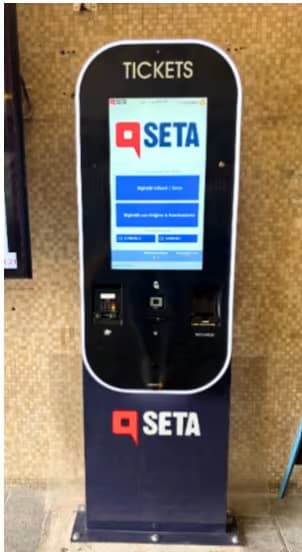
Conduent recently launched its latest-generation DOT-1 kiosk in Modena, marking a major step forward in the city’s public transport modernization. Fully operational since July 23, the new kiosk enables passengers to purchase travel tickets in QR-code format through an intuitive, fully digital interface. The installation reflects Conduent’s broader strategy to simplify and enhance the mobility experience by making services more accessible, efficient, and aligned with today’s travel habits. Six additional devices will follow across Modena, expanding access to digital ticketing and reinforcing the city’s leadership in transportation digitization. The project was completed ahead of schedule thanks to the dedication and collaboration of the Conduent team, whose professionalism made this milestone possible.
Conduent recently launched its latest-generation DOT-1 kiosk in Modena, marking a major step forward in the city’s public transport modernization. Fully operational since July 23, the new kiosk enables passengers to purchase travel tickets in QR-code format through an intuitive, fully digital interface. The installation reflects Conduent’s broader strategy to simplify and enhance the mobility experience by making services more accessible, efficient, and aligned with today’s travel habits. Six additional devices will follow across Modena, expanding access to digital ticketing and reinforcing the city’s leadership in transportation digitization. The project was completed ahead of schedule thanks to the dedication and collaboration of the Conduent team, whose professionalism made this milestone possible.
The gentle power of personalization
Central to this transformation is the idea of context. Using AI-driven personalization, content adapts to the time of day, the location of the device, or the user’s profile. Transit updates can be displayed in multiple languages during tourist season. Event listings shift for weekend travelers. Public health announcements take priority during emergencies.
For operators, this creates new revenue streams from local partnerships. For riders, it feels intuitive. The machine understands your needs and helps you navigate the city beyond the transit system.
A more inclusive, connected city
Perhaps most importantly, these kiosks are closing access gaps. With voice navigation, tactile controls, adjustable displays and human backup on demand, they serve users of all abilities without requiring an app, a smartphone or prior knowledge of the system.
In doing so, they blur the line between the digital and physical city. They become waypoints in an urban experience that is more equitable, more responsive and more human.
Enter DOT-1: a quiet revolution in plain sight
At Conduent Transportation, we’ve spent decades helping transportation leaders modernize operations. But with DOT-1, we asked a different question: How can a single piece of infrastructure deliver mobility, equity, engagement and flexibility all at once?
DOT-1 is our answer: a modular, weatherproof, AI-enabled kiosk designed not just for transit, but for the future of urban life. From paperless QR tickets to real-time multilingual assistance, DOT-1 gives agencies the tools to expand reach, deepen service, and adapt quickly without adding headcount.
It can be wall-mounted or pedestal-based. Indoors or outdoors. Configured for mobility or fixed deployment. And it’s built for longevity, with remote diagnostics, software updates and content scheduling all managed at scale.
But most importantly, it puts the user first. Whether they’re a daily commuter, a first-time visitor, or someone needing extra support, DOT-1 meets them where they are and helps them get where they’re going.
Smart cities need smart touchpoints
Digital transformation isn’t about replacing humans with machines. It’s about putting the right tools in the right places to support people better—more accessibly, more personally, and more sustainably.
And sometimes, the most transformative tools are the ones standing quietly on the corner, ready to help.
Ready to modernize your transit system?
Discover how Conduent’s fare collection and mobility solutions can reduce costs, boost revenue, and create seamless journeys for every rider. Learn more now, or reach out to an expert at https://www.conduent.com/transportation-solutions/transit/